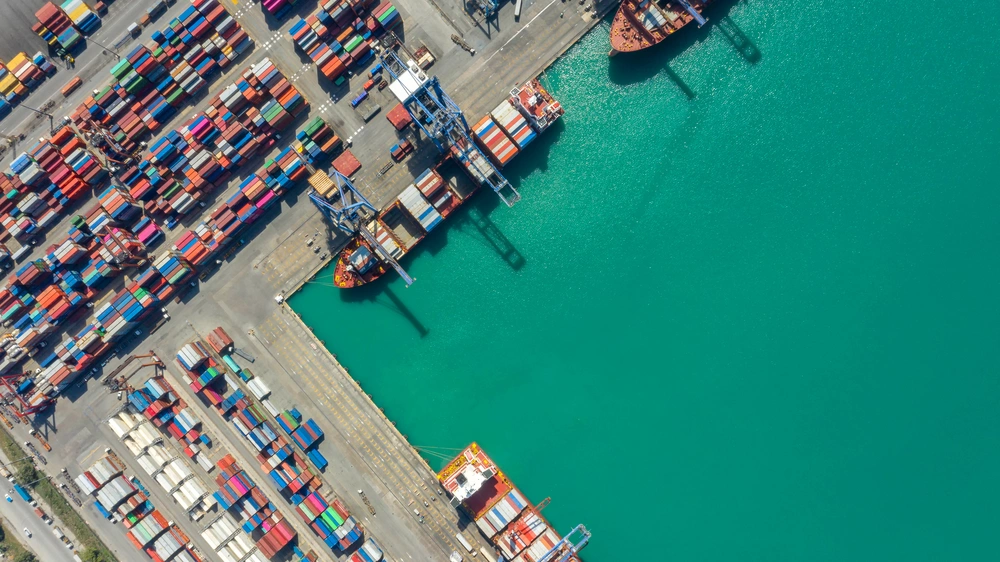
Red Sea routes begin to reopen

For the past two years, there has been uncertainty about whether the Red Sea routes would reopen. However, the focus has now shifted to how they will reopen and what the process will entail.

Some carriers have started testing routes through the Red Sea again. This is not a full return to normal operations but rather a cautious trial phase. Previously, many vessels were forced to sail around Africa, which added weeks of delays and tied up ships, ultimately reducing overall market capacity. If more vessels begin using the Red Sea again, journeys will become shorter, allowing ships to return more quickly and when capacity increases, freight rates typically come under pressure.

Currently, only a small number of services are being tested. Carriers are closely monitoring safety conditions, schedules and port responses. The positive aspect is that shippers and forwarders may soon have more routing options. Even as Red Sea routes continue to reopen, delays will not disappear overnight. Some potential issues may include:

  • Port congestion
  • Equipment shortages
  • Schedule changes
  • Blank sailings
  • Unstable transit times during the transition

The gradual reopening of the Red Sea presents opportunities, but it also reintroduces competition into the market.

Shorter routes equate to increased capacity, which can lead to fluctuations in pricing resulting in careful planning which will be essential in the coming year. To find out more about how this could impact your upcoming shipments, feel free to get in touch at 01527 910 095.
Six months at IM Freight Forwarding: What I’ve Learnt

Breanne reflects on six months at IM Freight Forwarding, managing major sea and air shipments, learning fast in an agile team, and delivering for global brands.

After nearly 6 years working in Freight, I thought I had seen it all – tight deadlines, complex documentation, multi-modal shipments and everything in between. Having managed freight teams and worked with huge names in global logistics, six months into my new role at IM Freight Forwarding, I’ve come to appreciate that in this ever-evolving industry, there is always more to learn.

Before joining, I worked with several international freight providers where I managed high-profile accounts overseeing large, challenging shipments worldwide. I’ve managed complex customs procedures, made strong client relationships, and led teams to deliver under pressure. These experiences shaped my understanding of international supply chains and gave me a great insight into the operational and strategic sides of freight forwarding. Surprisingly, IM Freight has offered something different – a fast-growing, agile business where innovation and adaptability are at the core of our operation, and with this, I’ve learnt so much in my short time here.

Working in a small, supportive team has been incredibly insightful. Our managing director, Luke, has been very supportive, encouraging me to take on some of our biggest projects and manage the process from start to finish, which thankfully, could not have gone better. Having someone who not only understands the complexities of global freight but also takes the time to guide, challenge, and support me has made a significant impact.

One of the highlights of my role has been continuing to support international shipping for well-known brands. Whether coordinating sea freight to South Africa or organising urgent air shipments to the USA, each shipment has been unique, and no project is ever the same. I am excited to see what the next six months will bring and to take on new challenges that will enhance my expertise in my role. With such a supportive team, I am confident that this company will continue to grow from strength to strength.

Luke Wilson, Managing Director, stated, “Breanne brings a great deal of knowledge and experience to our team. Since joining, she has successfully managed and led some of our largest projects whilst making it look easy. Thank you Breanne for your dedication to our clients and for making sure every project is on track and completed.”

SOLAS Container Weight Verification Requirement

The International Maritime Organisation (IMO) has amended the Safety of Life at Sea Convention (SOLAS) to require, as a condition for loading a packed container onto a ship for export, that the container has a verified weight.

The Shipper is responsible for the verification of the packed container’s weight. This requirement will become legally effective on July 1, 2016. After that date, it would be a violation of SOLAS to load a packed container onto a vessel if the vessel operator and marine terminal operator do not have a verified container weight.

Requirements

  • The Shipper (listed as shipper in the bill of lading or sea waybill) is responsible for providing the VGM to the carrier in reasonable time prior to vessel loading.
  • The VGM consists of cargo weight including packaging and dunnage (securing) materials and tare weight of container.
  • The Carrier is responsible for relaying the VGM to its terminal.
  • Container means standard containers, tank containers, flat racks and bulk containers.
  • The Data to be provided to the carrier consists of the VGM and the shipper’s (Individual’s) authorized signature (can be electronic). Local/national Laws/Rules might require additional data, processes or documents (e.g. weighing note).
  • The Scale used for weighing has to be calibrated/certified in accordance with local/national rules.
  • There are two methodologies for calculating the VGM:
    • Weigh the packed/laden container
    • Weigh all packages, packaging and dunnage material and add the tare weight of the container
  • Carriers WILL NOT LOAD containers without having VGM.

For further information, please see the Maritime and Coastguard Agency website.